
Ask a child why the ground in Rotorua smells like a forgotten egg sandwich and you will get a delighted, disgusted answer within about half a second. Ask them why the ground is hot, and you'll get a much more interesting silence.
It's the best question of the winter, and July — cold, grey, and generously supplied with school holidays — is exactly the right time to go and find the answer with your feet in a steaming pool.
Aotearoa sits directly on the join between two enormous slabs of the Earth's crust: the Pacific plate and the Australian plate. They are grinding into one another right now, very slowly, and have been for millions of years. This is why we have mountains, why we have earthquakes, and why we have places where the planet's heat leaks out.
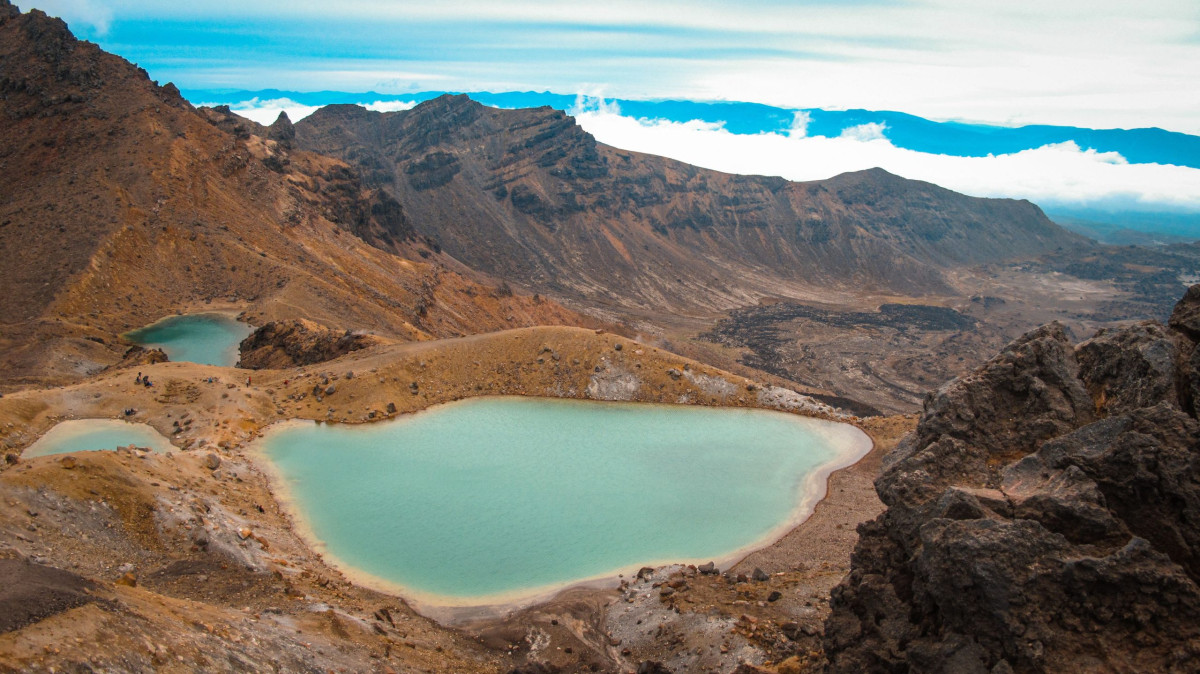
Down the middle of the North Island runs the Taupō Volcanic Zone, a broad belt of restless country stretching from Ruapehu up through Rotorua and out to Whakaari. Beneath it, molten rock sits far closer to the surface than it has any business doing.
Here's the part children love. Rain falls on the hills, soaks down through cracks in the rock, meets that heat, and comes roaring back up as steam, boiling mud and hot water. The rotten-egg smell is hydrogen sulphide, a gas hitching a ride to the surface. It's not pollution. It's the planet exhaling.
Pōhutu Geyser at Whakarewarewa in Rotorua is the largest active geyser in the southern hemisphere, and it can fire a column of scalding water up to thirty metres into the air — often once or twice an hour. Standing in the cold, watching that happen, is genuinely thrilling for a six-year-old and quietly astonishing for a forty-year-old.
Lake Taupō looks like an ordinary lake. It is not. It is a crater, left behind by eruptions on a scale that's difficult to hold in your head. Point that out on the drive past and watch them go quiet.
Hot Water Beach on the Coromandel is the one they'll never forget. Bring a spade, arrive within two hours either side of low tide, and dig your own hot pool in the sand. Fair warning: the water surging up underneath can be genuinely scalding, so dig a channel and let cold seawater in. Test with a hand, not a foot.
Then there's the simplest pleasure of all — climbing into a hot pool while your ears are cold and the steam is rising off the water. Rotorua, Hanmer Springs, Maruia, Waiwera, Miranda, and a hundred smaller pools besides. Winter is not the wrong season for this. Winter is the only proper season for this.
A few sensible notes: stay on the marked paths in thermal areas, because the crust is thin and the mud underneath is not friendly. Take swimming things and a towel each, and expect the smell to follow you home in your hair.
Most of the time, the Earth is scenery — a thing that sits still and holds up the trampoline. In Rotorua it moves. It steams, gurgles, spits and stinks.
For one week in July, your children get to stand on a planet that is very obviously alive. That's worth the drive, the smell, and every last damp towel in the boot.

"As we like to say ....
Get off the couch and get out there"
 © 2023 letsgokids
Get latest updates, news & offers


 office@letsgokids.co.nz